Body
BMI Calculator
Calculate your Body Mass Index to assess if your weight is healthy for your height using the standard BMI formula.
Use Calculator
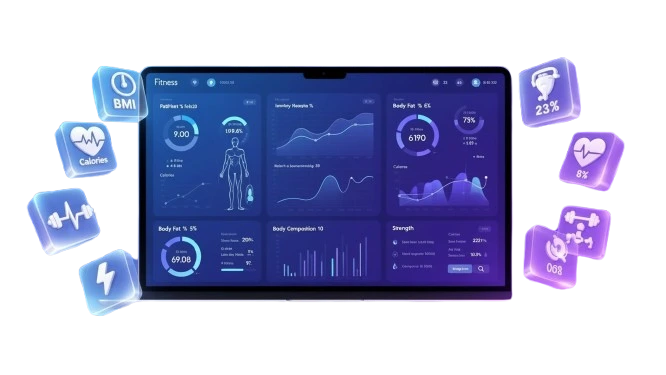
Precision tools trusted by personal trainers, athletes, and fitness enthusiasts. Calculate BMI, macros, one-rep max, TDEE, and 40+ more metrics—all 100% free.
Understand your body metrics including BMI, body fat percentage, and lean mass
Calculate your Body Mass Index to assess if your weight is healthy for your height using the standard BMI formula.
Use CalculatorEstimate your body fat percentage using multiple measurement methods including skinfold, circumference, and visual estimation.
Use CalculatorCalculate your lean body mass (fat-free mass) to understand your muscle, bone, and organ weight composition.
Use CalculatorDetermine your ideal weight range based on height, frame size, age, and gender using multiple formulas.
Use CalculatorCalculate your waist-to-hip ratio to assess body fat distribution and associated health risks.
Use CalculatorDetermine your body frame size (small, medium, large) based on wrist and elbow measurements.
Use CalculatorCalculate body fat percentage using the U.S. Navy circumference method with neck, waist, and hip measurements.
Use CalculatorEstimate body composition using the U.S. Army body fat measurement standards and tape test method.
Use CalculatorCalculate calories, macros, and optimize your nutrition for any fitness goal
Calculate your Total Daily Energy Expenditure to understand how many calories you burn daily based on activity level.
Use CalculatorCalculate your Basal Metabolic Rate—the calories your body needs at complete rest for basic life functions.
Use CalculatorCalculate optimal protein, carbohydrate, and fat ratios based on your fitness goals and body composition.
Use CalculatorDetermine your daily protein requirements based on weight, activity level, and muscle-building goals.
Use CalculatorCalculate the optimal calorie deficit for safe, sustainable weight loss while preserving muscle mass.
Use CalculatorDetermine the ideal calorie surplus for lean muscle gain without excessive fat accumulation.
Use CalculatorCalculate your daily hydration needs based on body weight, activity level, and climate conditions.
Use CalculatorOptimize your nutrient timing for pre-workout, post-workout, and daily meal scheduling.
Use CalculatorMaximize your lifts with rep max calculators and training programming tools
Calculate your estimated one-rep maximum for any lift using weight and reps performed.
Use CalculatorEstimate your bench press one-rep max and get percentage-based training recommendations.
Use CalculatorCalculate your squat one-rep maximum and optimal training loads for strength progression.
Use CalculatorDetermine your deadlift one-rep max using submaximal testing for safe strength assessment.
Use CalculatorCalculate your Wilks coefficient to compare powerlifting performance across weight classes.
Use CalculatorConvert between rep ranges and percentages of your one-rep max for programming.
Use CalculatorCalculate total training volume (sets × reps × weight) to track progressive overload.
Use CalculatorDetermine optimal rest intervals between sets based on training goals and intensity.
Use CalculatorPlan training cycles with volume, intensity, and deload week recommendations.
Use CalculatorUse Rate of Perceived Exertion to autoregulate training intensity based on daily readiness.
Use CalculatorCalculate your training max (typically 85-90% of 1RM) for percentage-based programming.
Use CalculatorDetermine optimal kettlebell weight and swing volume for conditioning and power development.
Use CalculatorTrack cardiovascular fitness, pace, and endurance training metrics
Estimate your maximum oxygen uptake capacity—the gold standard measure of cardiovascular fitness.
Use CalculatorCalculate your training heart rate zones for fat burning, aerobic, and anaerobic training.
Use CalculatorCalculate running pace, splits, and finish times for various race distances from 5K to marathon.
Use CalculatorPredict your marathon finish time based on shorter race performances and training data.
Use CalculatorCalculate swimming pace per 100m/yard and predict times for various pool distances.
Use CalculatorEstimate cycling power output and FTP for training zone calculation and race pacing.
Use CalculatorCalculate rowing split times, watts, and pace for ergometer and on-water training.
Use CalculatorMilitary fitness tests, athletic performance, and specialized assessments
Calculate your Army Combat Fitness Test score across all six events with MOS-specific standards.
Use CalculatorMeasure vertical jump performance and calculate power output for athletic assessment.
Use CalculatorUnderstanding your body's metrics is the foundation of any successful fitness journey. Whether you're trying to lose weight, build muscle, improve athletic performance, or simply maintain optimal health, having accurate data about your body composition, nutritional needs, and training capacity is essential.
Generic fitness advice rarely works because every body is different. A 6-foot-2 athlete with 15% body fat has vastly different caloric needs than a 5-foot-4 office worker at 30% body fat. Our fitness calculators eliminate guesswork by providing personalized recommendations based on your unique metrics.
Body Composition Calculators help you understand what you're made of. Your BMI gives a quick snapshot of weight-to-height ratio, but body fat percentage and lean body mass tell the real story. Our calculators use validated formulas like the Navy method and Jackson-Pollock equations to estimate these crucial metrics.
Nutrition Calculators take the confusion out of eating for your goals. Your TDEE (Total Daily Energy Expenditure) is the starting point—once you know how many calories you burn, you can adjust intake for fat loss or muscle gain. Our macro calculator then breaks this into optimal protein, carbohydrate, and fat targets.
Strength Training Calculators optimize your programming. Knowing your one-rep max allows you to train at precise percentages for strength, hypertrophy, or power. The Wilks Score helps competitive lifters compare performance across weight classes.
Cardio & Endurance Calculators improve cardiovascular training efficiency. Training in the right heart rate zone—whether for fat oxidation, aerobic development, or anaerobic threshold—requires knowing your personal zones based on max heart rate and VO2 max.
Numbers are meaningless without context. Our calculators include reference ranges based on age, sex, and fitness level. A "good" VO2 max for a 50-year-old is different from a 25-year-old athlete. Similarly, optimal macro ratios vary based on training style—endurance athletes need more carbs than powerlifters.
Remember that calculators provide estimates based on population averages. Individual variation exists, so use these tools as starting points and adjust based on real-world results. Track your progress, reassess regularly, and refine your approach over time.
Expert answers to common fitness calculation questions
Choose from 45+ free fitness calculators to optimize your training and nutrition.
Explore All CalculatorsExplore all free calculators on Clickzy to make smarter, data-driven fitness decisions.
On our Body Composition Calculators page, the Jackson-Pollock Body Density Calculator helps provide a more accurate picture of your fitness by estimating body fat percentage from skinfold measurements.
Unlike BMI alone, this method focuses on body composition, supporting more informed decisions about fat loss, muscle gain, and overall health tracking.